
Analytics tools have become essential for understanding user behavior and optimizing digital experiences. Traditional platforms track predetermined events and metrics, providing valuable data for decision-making. However, many businesses discover critical insights only after they’ve already lost opportunities.
Heaps takes a fundamentally different approach to analytics by automatically capturing every user interaction. This comprehensive data collection reveals patterns and behaviors that conventional analytics tools completely miss. Understanding how Heaps works helps businesses uncover hidden opportunities for growth.
Understanding Automatic Event Capture Technology
Most analytics platforms require manual event tracking setup. Developers must identify important interactions, write tracking code, and deploy updates before data collection begins. This process creates inevitable gaps in data coverage.
Heaps automatically captures all clicks, taps, form submissions, and page views without manual instrumentation. The platform records every user interaction from the moment implementation begins. Therefore, businesses never lose historical data about user behaviors they didn’t initially consider important.
This retroactive analysis capability distinguishes Heaps from traditional tools. Companies can investigate questions about past user behavior without having set up tracking in advance. Additionally, teams avoid the lengthy development cycles required to add new tracking events.
The automatic capture extends to dynamic content and single-page applications. Heaps recognizes changes in page state and user interface elements automatically. Moreover, the system maintains data integrity even when websites undergo design changes or restructuring.
Discovering User Journeys Without Predefined Funnels
Traditional analytics requires creating funnels before analyzing conversion paths. Teams must hypothesize user journeys and configure tracking accordingly. However, users often follow unexpected paths that predetermined funnels never capture.
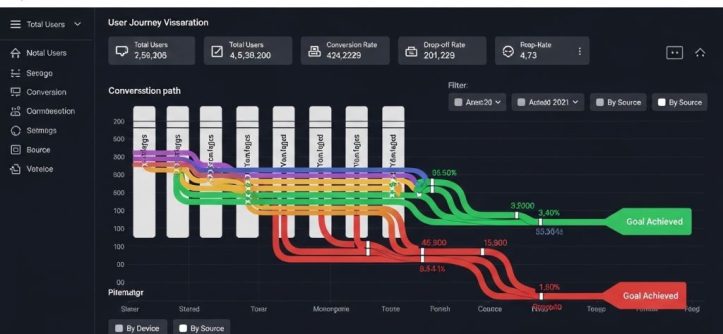
Heaps reveals actual user journeys through its automatic capture of all interactions. Analysts can explore any sequence of events retroactively without prior configuration. This flexibility uncovers surprising patterns in how users navigate through applications.
Companies frequently discover that successful conversions follow paths never anticipated during funnel setup. Alternative routes to conversion might represent easier experiences worth promoting. Therefore, understanding these organic journeys enables better user experience design.
The platform identifies drop-off points throughout entire user sessions rather than just within defined funnels. This comprehensive view shows where users encounter friction across all possible paths. Additionally, comparing behaviors between converting and abandoning users highlights critical differences.
Identifying Micro-Behaviors That Impact Conversions
Small user actions often predict larger outcomes better than obvious metrics. Traditional analytics might track button clicks but miss subtle behaviors indicating engagement levels. Heaps captures these micro-behaviors automatically, enabling correlation analysis with conversion events.
Scroll depth, hover patterns, and time spent on specific page sections all provide conversion signals. Users who carefully read product descriptions behave differently than those who quickly skim. Moreover, these engagement patterns help identify qualified leads versus casual browsers.
Form interaction patterns reveal user intent and potential obstacles. Heaps shows which fields users complete first, where they hesitate, and when they abandon forms. This granular data identifies specific friction points requiring optimization.
Session replay capabilities contextualize quantitative data with qualitative observations. Watching actual user sessions reveals confusion, frustration, or delight that numbers alone cannot convey. Therefore, combining behavioral metrics with session replays provides complete understanding.
According to TechCrunch, Heaps’ automatic data capture approach has made analytics accessible to non-technical team members who previously struggled with complex tracking implementations.
Analyzing Feature Usage Across Entire Applications
Product teams need comprehensive feature usage data to prioritize development roadmaps. Traditional analytics only tracks features someone remembered to instrument. Consequently, teams lack visibility into whether unused features simply lack awareness or genuine utility.
Heaps provides complete visibility into every feature interaction without selective tracking. Product managers see exactly which capabilities users discover and engage with regularly. Additionally, the platform identifies features that users attempt but abandon quickly.
Adoption rates for new features become immediately visible without additional implementation work. Teams can monitor uptake patterns from feature launch day using retroactive analysis. This eliminates waiting periods for tracking code deployment and data accumulation.
Cross-feature usage patterns reveal how capabilities work together in user workflows. Understanding feature combinations helps identify complementary functionality worth promoting together. Moreover, these insights guide integration improvements between related features.
Segmenting Users Based on Behavioral Patterns
Demographic segmentation provides limited insight compared to behavioral groupings. How users actually interact with products matters more than who they claim to be. Heaps enables sophisticated behavioral segmentation without predefined criteria.
The platform identifies user cohorts based on any combination of actions or characteristics. Analysts can create segments retroactively based on behaviors discovered during exploration. Therefore, hypothesis testing doesn’t require waiting for new data collection periods.
Power users exhibit distinct patterns worth understanding and replicating. Heaps reveals specific action sequences and feature combinations that characterize highly engaged users. These patterns inform onboarding optimization and engagement strategies.
At-risk user segments become identifiable through deviation from successful user behaviors. Early warning signs of churn appear in interaction patterns before users completely disengage. Additionally, intervention strategies can target these specific behavioral indicators.
Uncovering Hidden Technical Issues
User experience problems often manifest in behavioral data before users report them. Traditional analytics might show traffic drops but cannot pinpoint exact causes. Heaps’ comprehensive data capture reveals technical issues through abnormal interaction patterns.
Unexpected error states and broken workflows appear as unusual behavioral sequences. Users clicking repeatedly on non-functional elements indicate interface problems. Moreover, comparing successful sessions with problematic ones isolates specific issues.
Mobile versus desktop behavior differences highlight responsive design problems. Heaps shows where mobile users struggle compared to desktop counterparts. These insights guide mobile optimization priorities based on actual impact.
Browser or device-specific issues emerge through segmented behavioral analysis. Problems affecting only certain user configurations might otherwise remain invisible. Therefore, comprehensive data collection ensures no user segment encounters undetected obstacles.
According to Forbes, product analytics platforms that capture comprehensive user data enable companies to make faster, more confident decisions about product development.
Enabling Non-Technical Teams to Explore Data
Traditional analytics platforms require technical expertise for meaningful analysis. SQL knowledge and data science skills create barriers for product managers and marketers. Heaps democratizes analytics through visual interfaces accessible to all team members.
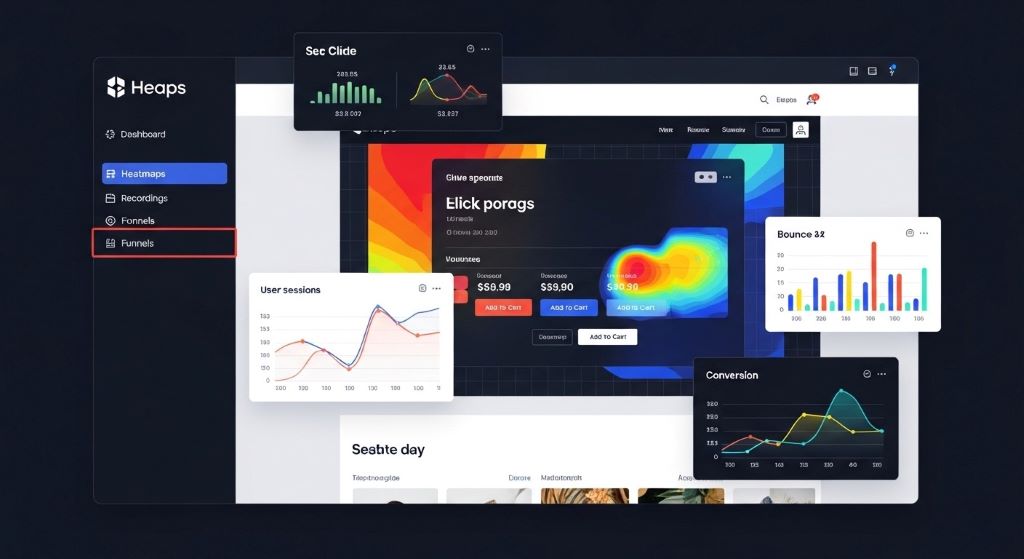
The visual query builder allows point-and-click analysis without code writing. Users can define segments, create funnels, and analyze journeys through intuitive interfaces. Additionally, saved analyses become reusable templates for ongoing monitoring.
Collaboration features enable teams to share insights and build collective understanding. Annotated analyses and shared dashboards facilitate cross-functional alignment. Moreover, democratized access reduces bottlenecks waiting for data team availability.
Natural language descriptions accompany technical metrics for broader comprehension. Non-technical stakeholders understand findings without translating analytics jargon. Therefore, insights drive action more quickly across organizations.
Accelerating Time to Insight Discovery
Traditional analytics implementations require weeks or months before useful data accumulates. Teams must plan tracking, deploy code, wait for data collection, and then analyze results. This lengthy cycle delays optimization efforts and strategic decisions.
Heaps provides immediate access to historical data from implementation day forward. Retroactive analysis means any question receives answers using existing data. Consequently, businesses optimize faster without waiting for new tracking deployments.
Ad-hoc exploration happens instantly without development resources. Product managers investigate hypotheses immediately rather than submitting tracking requests. Additionally, this agility enables rapid experimentation and iteration.
The platform reduces dependence on data engineering teams for routine analysis. Self-service capabilities free technical resources for complex projects requiring specialized skills. Moreover, analysts spend less time preparing data and more time generating insights.
Integrating Behavioral Data with Business Outcomes
User behavior correlates with business metrics in ways traditional analytics often misses. Heaps connects micro-interactions with macro outcomes like revenue and retention. This linkage quantifies the business impact of user experience improvements.
Revenue attribution extends beyond last-click models to comprehensive journey analysis. The platform shows which interaction sequences correlate with higher customer lifetime value. Therefore, teams optimize experiences based on long-term value rather than immediate conversions.
Retention analysis identifies behavioral patterns distinguishing loyal customers from churning users. Early engagement activities that predict long-term retention become prioritization targets. Additionally, these insights inform onboarding and activation strategies.
Product-qualified lead scoring incorporates behavioral signals beyond basic demographic data. Sales teams receive context about prospect engagement levels and feature interests. Moreover, this intelligence improves conversion rates and reduces sales cycle lengths.
Maintaining Data Privacy and Compliance
Comprehensive data collection raises important privacy and compliance considerations. Heaps addresses these concerns through built-in privacy controls and compliance features. Organizations can leverage automatic capture while respecting user privacy rights.
Data redaction capabilities automatically exclude sensitive information from collection. Personal identifiable information and payment details remain protected by default. Additionally, custom redaction rules accommodate specific compliance requirements.
User data deletion requests process completely through automated workflows. GDPR and CCPA compliance features enable one-click fulfillment of data subject rights. Moreover, audit trails document all data handling activities for regulatory requirements.
Role-based access controls limit data visibility to appropriate team members. Sensitive customer information remains restricted while enabling necessary analysis. Therefore, organizations balance insight generation with privacy protection.
Scaling Analytics Across Growing Organizations
As companies grow, analytics complexity increases exponentially with users and features. Traditional tools struggle with performance and usability at scale. Heaps architecture supports enterprise-scale data volumes without compromising analysis speed.
The platform handles billions of events monthly while maintaining query performance. Real-time data processing ensures current information guides decisions. Additionally, historical data remains equally accessible regardless of volume.
Multi-product analytics within unified platforms simplify cross-product insights. Companies with diverse product portfolios analyze user journeys spanning multiple applications. Moreover, consolidated reporting provides executive visibility across entire digital portfolios.
Governance features ensure consistency as analytics democratization expands. Standardized definitions and centrally managed segments prevent conflicting analyses. Therefore, scaling analytics access maintains data quality and reliability.
Conclusion
Heaps transforms analytics by automatically capturing every user interaction without manual instrumentation. This comprehensive approach reveals user journeys, micro-behaviors, and feature usage patterns that traditional tools completely miss. Organizations gain immediate access to historical data, enabling retroactive analysis and faster optimization cycles. Additionally, visual interfaces democratize analytics across technical and non-technical teams alike. The platform connects behavioral insights directly to business outcomes while maintaining strong privacy protections. Therefore, companies using Heaps uncover hidden opportunities for growth that competitors relying on conventional analytics never discover. Implementing automatic event capture fundamentally changes how organizations understand and improve user experiences.
Frequently Asked Questions
How does Heaps differ from Google Analytics?
Heaps automatically captures all user interactions without manual event tracking, while Google Analytics requires configuring specific events in advance. Heaps enables retroactive analysis of any user behavior, whereas Google Analytics only collects data after events are defined and implemented.
Does Heaps slow down website performance?
No, Heaps uses asynchronous loading that doesn’t impact page load times. The tracking script loads after primary content renders, ensuring user experience remains unaffected. Additionally, data transmission happens in background processes that don’t interfere with interactions.
Can I use Heaps alongside existing analytics tools?
Yes, Heaps complements rather than replaces other analytics platforms. Many organizations use Heaps for deep behavioral analysis while maintaining Google Analytics for traffic reporting. The platforms serve different purposes and provide complementary insights when used together.
How long does Heaps implementation take?
Basic implementation requires adding a single code snippet to websites or apps, typically completed within hours. However, full setup including team training and dashboard configuration might take several weeks. Data collection begins immediately after code deployment without additional configuration.
What types of businesses benefit most from Heaps?
Product-led companies, SaaS platforms, and ecommerce sites gain significant value from Heaps’ behavioral analytics. Organizations with complex user journeys or frequent product changes benefit from automatic capture. Additionally, companies with limited technical resources appreciate the no-code analysis capabilities.
Related Topics:
Why Choosing the Right Technology Stack is Crucial for Hybrid App Development
Why React Native Is the Best Choice for App Development



Leave a Reply