
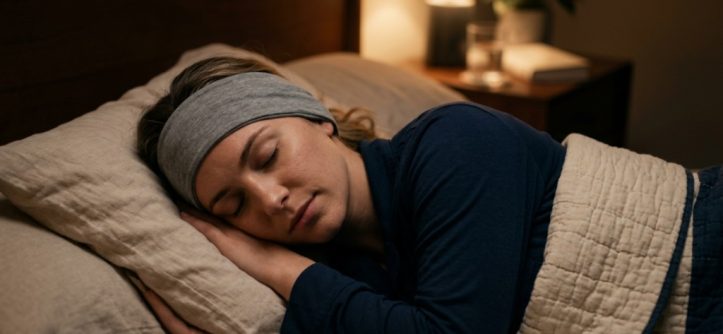
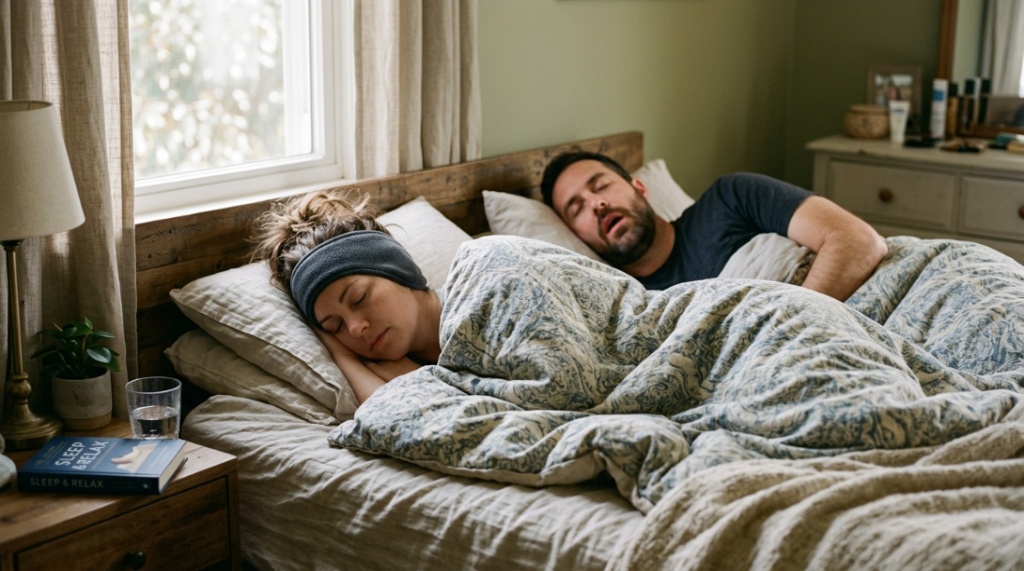
My partner’s snoring hit 65 decibels on a phone meter one night roughly the volume of a vacuum cleaner running 3 feet from my head, every night, for 8 hours. Earplugs alone could not fully block it, separate bedrooms felt like relationship defeat, and the $300 noise-cancelling options seemed absurd for sleeping. Then I found headphones for blocking snoring under $40 that solved the problem completely through audio masking not by silencing the snoring but by filling my ears with consistent sound that made the snoring imperceptible. Affordable sleep headphones paired with the right audio content provide a reliable, relationship-saving solution that costs less than two weeks of poor sleep costs in lost productivity, irritability, and health decline. This guide identifies exactly which approach works for each snoring intensity level and which budget products deliver genuine overnight relief.
How Do Sleep Headphones Actually Block Snoring Sound?
Sleep headphones block snoring through audio masking rather than physical sound blocking — they play consistent background noise (white noise, pink noise, brown noise, or nature sounds) at a volume that makes the irregular snoring pattern imperceptible to your brain, even though both sounds technically reach your ears simultaneously.
Finding the right pair of headphones depends entirely on your environment. While soft, padded headbands are perfect for the bed, you will need something completely different if you want to transition from a quiet night’s sleep to an intense morning workout. For active routines, you need a secure fit and sweat resistance, making options like the QCY T2S, good wireless headphones for sport, an excellent companion to keep you motivated without slipping out of place during heavy movement.
The science of audio masking:
- How masking works: Your brain processes sounds relative to background noise level. A snore at 60dB in a silent room (background 20dB) is extremely noticeable — 40dB above background. That same 60dB snore with 50dB white noise playing is only 10dB above background — barely perceptible and easily ignored by a sleeping brain.
- Why consistent sounds mask irregular ones: Your brain habituates to constant sounds (stops consciously processing them) but alerts to irregular sounds (potential threats). White noise is constant — your brain ignores it. Snoring is irregular — your brain flags it. When white noise raises the background level, snoring no longer triggers alert response.
- Effective masking volume: Set masking audio 5–10dB below the snoring volume. You do not need to drown out snoring — just raise the noise floor close enough that snoring no longer stands out. This keeps total volume at safe sleep levels (under 60dB).
Three approaches to snoring management with headphones:
| Approach | How It Works | Effectiveness | Cost |
|---|---|---|---|
| Audio masking (white/pink noise) | Raises background noise to make snoring imperceptible | Excellent for light-moderate snoring (under 65dB) | $20–$50 (headphones + free app) |
| Active Noise Cancellation (ANC) | Electronics cancel low-frequency snoring sounds | Good for deep/rumbling snoring patterns | $50–$150 (ANC sleep buds) |
| Physical isolation + masking | Tight-fitting buds block some sound + audio masks the rest | Best for heavy snoring (65dB+) | $30–$80 (isolating sleep buds) |
Which Audio Content Works Best for Masking Snoring?
Brown noise and pink noise mask snoring most effectively because their frequency profiles (heavier in low frequencies) match the dominant frequency range of snoring (100–500 Hz) — while white noise works adequately, its higher-frequency emphasis provides less efficient masking of the low rumble that characterizes most snoring.
- Brown noise (best for snoring): Deep, rumbling, ocean-like sound concentrated in low frequencies. Matches snoring’s frequency range perfectly, requiring less volume to mask effectively. Most natural-sounding for sleep. Recommended first choice.
- Pink noise (excellent): Balanced frequency spectrum with slight low-frequency emphasis. Natural rain-like sound. Effective masking across snoring types. Studies show pink noise may improve sleep quality beyond just masking.
- White noise (good): Equal energy across all frequencies. Effective but requires slightly higher volume because its high-frequency content does not match low-frequency snoring efficiently. Can sound “hissy” to some listeners.
- Nature sounds (variable): Rain, ocean waves, and river sounds provide natural masking that many sleepers prefer. Effectiveness depends on consistency — steady rain works well; variable sounds (birds, thunder) may disrupt sleep.
- Guided sleep meditation: Useful for falling asleep but stops providing masking when the recording ends. Best combined with auto-playing noise track that continues after meditation finishes.
Free apps that deliver effective masking: MyNoise, White Noise (by TMSOFT), Rain Rain, Noisli. Paid options with timer features and mixing: Calm, Headspace, Sleep Cycle. Most phone apps provide identical audio quality to expensive dedicated sound machines.
What Budget Sleep Headphones Block Snoring Most Effectively?
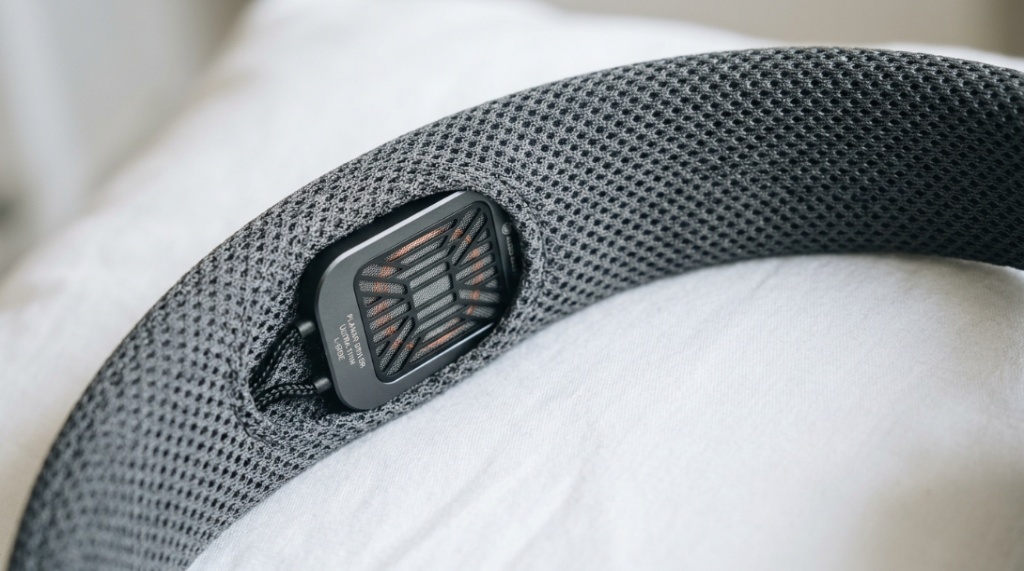
Headband-style sleep headphones in the $25–$45 range provide the most effective snoring blocking for the price because they combine physical sound reduction (fabric covering ears) with audio masking capability (Bluetooth speakers) in a design comfortable enough for all-night side sleeping.
- Headband style ($20–$40): Best overall for snoring. The fabric band provides 5–10dB of passive sound reduction (covering ears), then speakers add masking audio. Combined effect blocks light-to-moderate snoring completely. Comfortable for side sleeping. 8–10 hour battery handles full nights.
- Sleep earbuds with isolation ($30–$60): Silicone or foam tips provide 15–25dB passive isolation, then audio masking handles remaining sound. More effective sound blocking than headband style but less comfortable for side sleepers. Better for heavy snoring.
- Budget ANC sleep buds ($50–$80): Active electronics cancel low-frequency snoring sounds by generating inverse sound waves. Most effective technology for deep rumbling snoring. Higher cost but justified when snoring exceeds 65dB. Limited comfort options at this price versus $150+ premium ANC buds.
For most snoring situations (partner snoring at typical 50–65dB), a $30–$40 headband with brown noise provides complete masking. Only invest in ANC or isolating buds if headband+noise proves insufficient for your specific snoring exposure level.
How Loud Should You Play Masking Audio for Snoring?
Set masking audio at 40–55 decibels (roughly the volume of quiet background music or a gentle fan) — loud enough to raise the noise floor above which snoring becomes imperceptible, but quiet enough to remain safe for 8 hours of continuous exposure and not disrupt your own sleep quality.
- Safe sleep volume: Under 60dB for extended exposure. The WHO recommends under 70dB for hearing safety over 8 hours. Sleep audio at 40–55dB is well within safe limits for nightly use.
- Finding your effective level: Start at the lowest volume where you can hear the audio clearly. Increase gradually until your partner’s snoring is no longer noticeable. If you reach a volume that feels “loud” rather than background, you may need physical isolation (earplugs or isolating earbuds) combined with lower-volume masking.
- Volume-limiting safety: Some apps and headphones offer volume-limiting features that prevent exceeding safe thresholds. Enable these when available — it is easy to gradually increase volume night after night until you reach harmful levels without realizing.
What Should You Do if Headphones Alone Cannot Block the Snoring?
When headphones alone cannot mask heavy snoring (above 65dB), combine approaches: use foam earplugs for passive sound blocking (25–30dB reduction) PLUS sleep headphones over them for audio masking — the combined approach handles snoring up to 85dB, which covers even severe sleep apnea–level snoring.
- Level 1 (light snoring, under 55dB): Sleep headphones with masking audio alone. Brown noise at moderate volume solves completely. No additional blocking needed.
- Level 2 (moderate snoring, 55–65dB): Headband-style headphones with masking. If insufficient, try isolating sleep earbuds with foam tips that provide passive + active masking. Usually solved at this level.
- Level 3 (heavy snoring, 65–75dB): Foam earplugs (NRR 25–33) + headband-style headphones over them. Earplugs reduce snoring by 25dB, headband mask remaining sound. Combined: extremely effective.
- Level 4 (severe/apnea-level, 75dB+): Maximum isolation earbuds + ANC + masking audio. Consider encouraging partner to pursue sleep apnea evaluation — snoring above 75dB often indicates medical condition requiring treatment beyond your coping strategies.
For budget-friendly sleep headphone options tested specifically against snoring environments, the best budget headphones for sleeping reviewed provides effectiveness ratings against different snoring intensities — helping you choose the minimum investment needed for your specific snoring situation.
Conclusion
Blocking snoring with affordable sleep headphones works through audio masking — playing consistent brown or pink noise at 40–55dB that raises the background noise floor above which snoring becomes imperceptible. Headband-style sleep headphones at $25–$45 handle light-to-moderate snoring completely. Isolating earbuds or budget ANC options ($50–$80) address heavier snoring. Combined approaches (earplugs + headphones) handle severe snoring up to 85dB.
Stop losing sleep to a problem that costs $30–$50 to solve. Sleep headphones with proper masking audio restore full nights of uninterrupted rest without separate bedrooms, relationship tension, or expensive medical interventions. Try brown noise first — it matches snoring frequencies most efficiently and may solve your problem tonight for the cost of a free app download.
What audio content finally masked your partner’s snoring — white noise, brown noise, rain sounds, or something else? Share your winning combination below.
Frequently Asked Questions
Will sleep headphones completely eliminate snoring sounds?
For light-to-moderate snoring (under 65dB), yes — proper masking makes snoring completely imperceptible. For heavy snoring (65dB+), headphones alone reduce it to a barely-noticeable level that most people can sleep through. Combined with earplugs, even severe snoring becomes manageable. Complete silence is achievable for most snoring levels with the right approach.
Is it safe to use sleep headphones every night?
Yes — at volumes below 60dB, nightly use is safe indefinitely according to hearing health guidelines. The masking audio is continuous and moderate, unlike concert-level exposure that causes damage. Keep volume at the minimum effective level and use volume-limiting features when available. Annual hearing checks are sensible for any daily headphone user.
Should my partner see a doctor about their snoring?
If snoring exceeds 70dB, includes gasping/choking sounds, or the snorer experiences daytime exhaustion — yes. These indicate possible sleep apnea, a medical condition with serious health consequences beyond noise. Sleep headphones manage your symptoms but do not treat your partner’s potential medical issue. Both approaches can work simultaneously.
Can I use sleep headphones if I need to hear alarms?
Most sleep headphones play masking audio at volumes that still allow loud alarms (phone alarm at 80dB+) to break through. Additionally, many headband designs allow one ear to remain less covered. Smart alarm apps can play through the headphones themselves, guaranteeing you hear them. Test your alarm audibility before relying on sleep headphones to ensure wake-up reliability.
Do sleep headphones work for apartment noise too?
Yes — the same masking principle works for neighbor noise, traffic, and urban sounds. Brown noise effectively masks low-frequency sounds (bass music, traffic rumble, HVAC). White noise masks higher frequencies (voices, TV bleed). Choose noise color matching the dominant frequency of your specific disturbance for most effective masking.
How long do budget sleep headphones last with nightly use?
Quality budget options ($25–$45) last 12–18 months of nightly use before speakers degrade or batteries lose capacity. Headband fabric lasts longer if washed monthly (most are removable/washable). Budget for annual replacement as a sleep investment — $35/year for full nights of sleep is negligible cost relative to the health value of uninterrupted rest.


Leave a Reply